
How I Turn Archival Material Into Usable Notes
You have your archival materials and sources ready, and now you’re prepared to write. To simplify the writing process, step back and review your archival materials with your main research question in mind: turning your primary sources and notes into a coherent narrative or argument is essential. This guide will help you clarify and organize your notes for easier integration while you write. Even if deadlines are tight, take a moment to transform your notes, highlights, and archival pages into something usable. It’s so easy to open a PDF or image from your archival visit and fit it into a paragraph. That works if you have a solid rough draft, but if you’re just starting, take time to organize. After organizing, the next step is to consider how each piece supports your larger research goals.
I had 21 pamphlets that I loved and wanted to use in my dissertation at all costs. The question I had to ask was how to use them and what the most important part of these primary source documents is. In the end, I discussed four of them in detail, along with my larger notes to support my argument. What I used from all of them became a useful chart. What is the question you want your research to support? To me, it was that these were all similar and aimed to convince a US-speaking audience that understanding Latin American countries was crucial to winning World War II. If your question is loose, that’s okay. Try to answer it within your notes with what you have. Do you notice any names, dates, or patterns? What’s missing? For me, the exact year of publication was important information, and I struggled to find all the dates. In the end, they weren’t that crucial. I wanted to say these pamphlets were essential to the success of the Office of the Coordinator of Inter-American Affairs. Honestly, in the end, I could only say that we assume they were successful, given the high number of reprints requested for specific countries’ pamphlets.
Whether it was crucial to my argument that the pamphlets’ colors varied probably wasn’t, but it helped me describe them later without going back to the source. You want to get a basic layout of what you have. If you don’t need it, that’s okay, but if you do and someone asks that question later, you’ll know it’s in your notes! Your notes are meant for you. Make them as messy or clear as needed. You will want them to make sense to you later. “Peru, Green, 8 pages” makes sense in my notes. If someone else saw that, they might ask what is green and why it matters. Keep in mind, your notes are for you. You don’t have to share them, but you do need to understand them. While notes don’t need to make sense to others, to turn archives into notes, you do need a system:
- Descriptive Notes — what the source is
- Analytical Notes — what the source means.
- Interpretive Notes — how the source connects to your research question.
- Citation Notes — the metadata you capture to save you from pain – again, where to find it!
My example is very specific. What if you have 300 pages or images from your archival visit? Start simple and look for patterns again. Think about how you can organize those patterns into something useful. Do you have 20 letters written to the President within those 300 pages? If so, that’s an easy way to start. Your note could say something like, “Director General Eva Winters wrote the President 20 different times to ask that April 14, Pan-American Day, be made an official US Holiday.” Did she write to anyone else? “In addition, she asked the Texas governor 5 times, and on December 1, 1925, the holiday was created in Texas.”
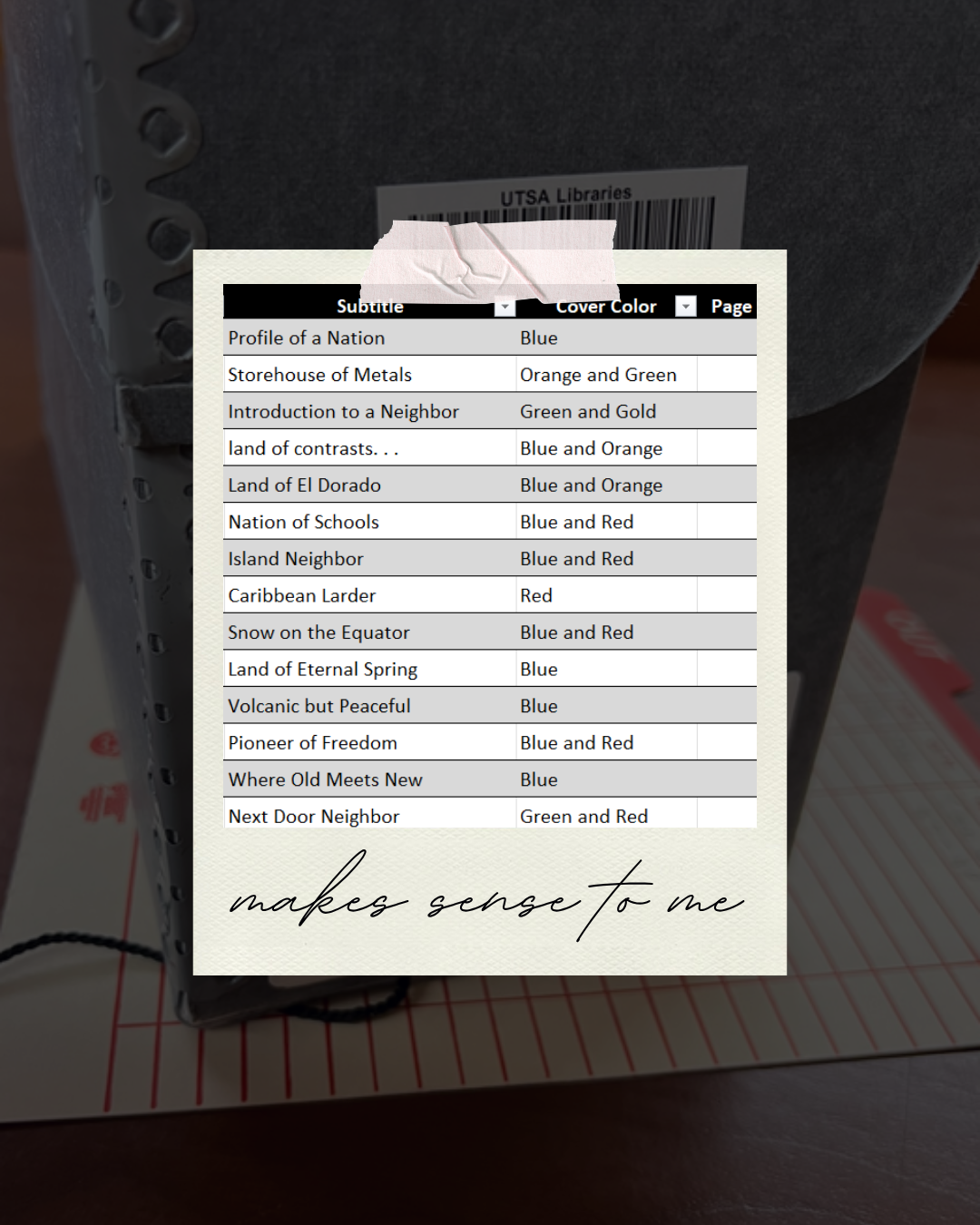 Sort your materials, then organize them in a way that makes sense to you—by chronology, theme, type, or creator. Return to your question and choose the method that fits best. Place sources in a folder and add them to your notes. Reference them so you can find them later. For example, “In the correspondence folder, there are 52 letters: 30 requests for x, 20 exchanges about x, and 2 thank-you notes.” Summarize a few examples in your own words. If a quote is important, include it and note its location for future reference. As your notes become more organized, you’ll see how they shape a broader map for your research. For another example, your note could read, “In this collection, I grouped X.” Explain why this is important to your study. Notes serve as a source map for you to reference as needed. Descriptive and interpretive notes simplify this step.
Once you have a different source, compare it using your note system. Look for patterns: contradictions, repetitions, and silences. Comparing it to other sources will lead to new questions and may reframe your work. Once you have a map or note system, start writing or see where you have holes. Do you need more information? Notes only become useful when they guide you toward a paragraph, argument, or example. I watch for the moment when a note feels halfway to a sentence—often, it’s small. That’s my cue to turn a rough note into a clear insight, then into a draftable paragraph. Archival research works this way: insight builds slowly from fragments until an idea takes shape. If you’re working on a project this week, choose one raw note and push it a step further. You may be surprised by what you form.

 Wendi Kavanaugh
Leave a comment