
A Personal Update from SECOLAS
In Fall 2018, I took a course called World War II: Germans/Lat Amer in Texas. In that small seminar, we built a series of interconnected papers and eventually submitted them to SECOLAS, where we presented them the following March in Oaxaca, Mexico. I’ve attended SECOLAS every year since—except for the online COVID year and the 2025 conference—and it remains one of the communities I love and connect with the most. It wasn’t my first professional conference, but it was the first where I immediately felt at home. These were my people (and don’t worry — I’ll be writing about SIH, another community I love, this October).
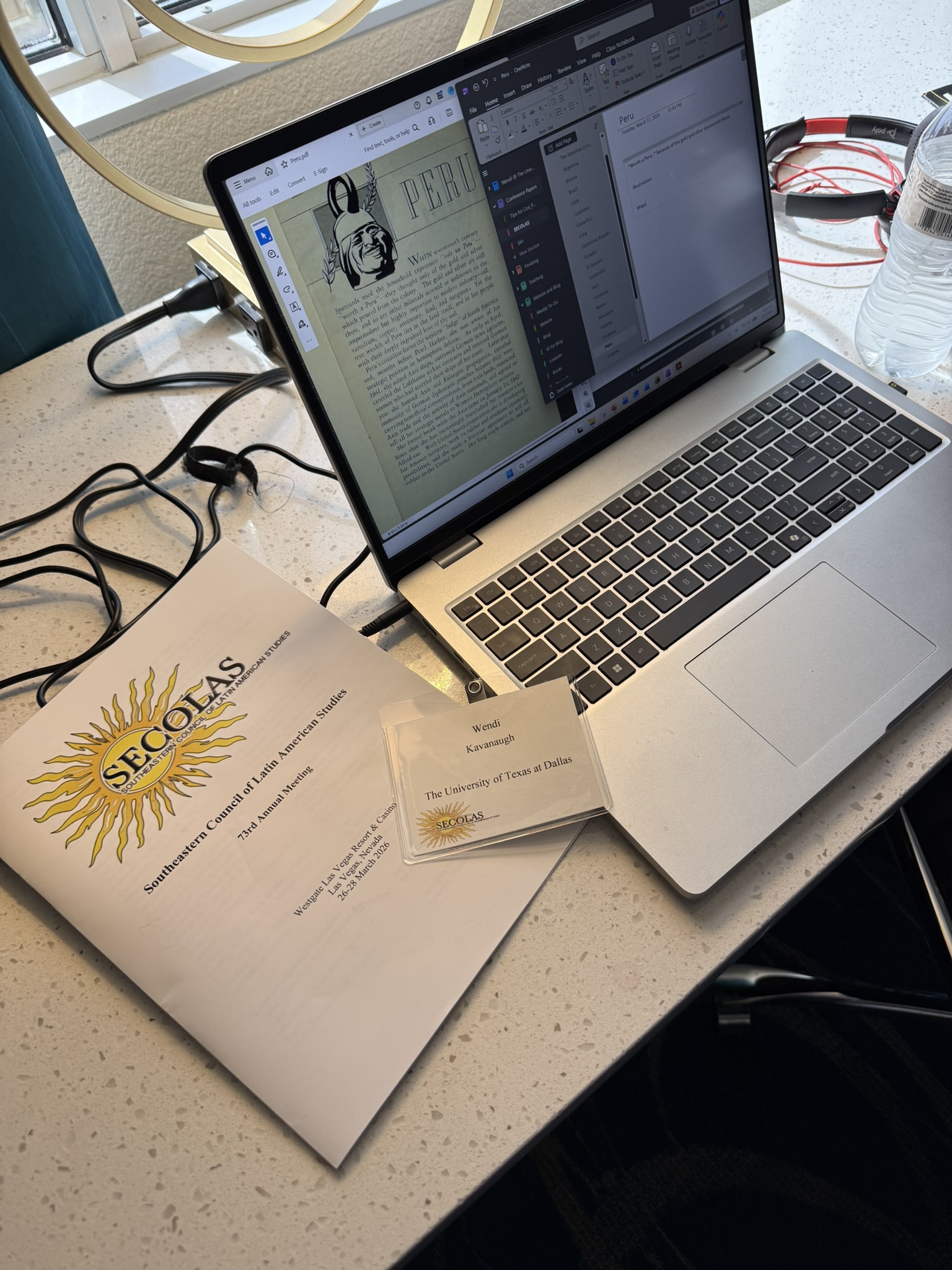 The Southeastern Council of Latin American Studies (SECOLAS) brings together academics, independent scholars, researchers, and graduate students studying Latin America and the Caribbean. Our fields include: Literature, History, Sociology, Political Science, Anthropology, Cultural Studies, Economics, and International Relations. This year, I finally felt like I belonged when I met a fellow presenter on Thursday night at our Welcome event. She knew our other presenter and found a way to connect our papers on the OCIAA to her work on drugs in Mexico. She knew where we were starting and ending and tied together in an amazing way.
Previously, at conferences, I was always nervous about talking to strangers or approaching the authors whose books I’d read for comps. But that fear was unnecessary. I eventually realized I’m just as much a researcher as they are. They’ve always welcomed and encouraged me. Now I try to do the same for others. One year, I was the very last person listed in the conference program, presenting on the final day in the final time slot. Ever since, I’ve made a point to stay until the end and make sure at least one of those late‑session presenters has someone in the audience.
Recently, I ran into one of the speakers from that same time slot and told her that her paper was the reason I chose that panel. I could see she was excited, flattered, and maybe a little nervous. I think we’ll both remember that moment. This year, I did not rush from panel to panel but took the time to chat and engage. I attended only the panels that drew me in quickly. I attended one panel because one of the papers was about teaching the history of bananas, something I’m determined to do at some point!
This month made me realize my research identity grows as much from the people around me as from the archives I study. I’m starting to trust my own voice. I see myself as a real researcher now, not just someone trying to prove they belong. More than anything, I see that research isn’t just about what we produce. It’s about the relationships we build, the conversations, panels, and shared curiosity. Conferences put our work into conversation with others. They challenge our thinking, broaden our perspectives, and spark new ideas. Most of all, they remind me that we build research together through generosity and collaboration. These experiences shape how I think, write, and see my place in this field.
Spending time with other scholars unexpectedly gave me a stronger sense of purpose. Hearing their questions, excitement, doubts, and surprising findings in the archives makes me think more clearly about my own work. This month and the conference changed how I see myself as a historian. I’m not just waiting to become one. I’m already here, part of the conversation, and contributing to the field I care about.

 Wendi Kavanaugh
Leave a comment